
Record US holiday spending ($275.1b online, +6.7%) masks a stretched consumer stocking up on essentials and leaning on BNPL.
Rising costs are biting: Thanksgiving travel has dipped from last year's record and dinner costs 6% more.
Markets reflect the squeeze, with energy and staples leading and discretionary lagging, and our inflation-aware positioning has delivered positive returns.
Investors get a welcome reprieve this week as US stock markets are closed on Thursday 26 November and close early on Friday 27. Thursday 26 is Thanksgiving, and families will be gathering around the turkey rather than their Bloomberg Terminals.
Travel
According to AAA (the US motoring organisation), 81.5m Americans will travel at least 50 miles from home for Thanksgiving between Tuesday 24 November and Monday 30 November[1]. Down slightly from 81.6m in 2025, this ends three straight years of record travel; AAA blames record petrol prices and higher airfares.
Trolleys and Tight Budgets
Shopping, by contrast, looks as strong as ever: Adobe expects Cyber Monday, the season's biggest online shopping day, to top $15b. US online sales are expected to hit a total of $275.1b over the holiday season (1 November to 31 December), growing 6.7% year-over-year[2]. By comparison, UK consumers are expected to spend $37.3b online over the same period, far less per capita than the US.
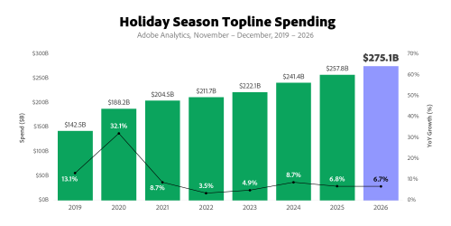
The pattern of spending is changing, though. Rather than gifts or gadgets, many consumers are using discounts to stock up on essentials. Over Thanksgiving, online sales of personal hygiene products are expected to jump 150% versus September averages, and clothing basics 210%. Other essentials set to see a boost include baby products (up 113%), pet products (up 93%) and household cleaning items (up 49%). Buy Now Pay Later (BNPL) is expected to drive $21.3b of sales between November and December, up 6.6% YoY[3], perhaps reflecting a stretched consumer.
The New York Fed's latest household debt report puts US credit card balances at $1.29t in Q3, up $22b on the previous quarter, while the Federal Reserve's average rate on accounts charged interest stands at 22.36%. Against this backdrop, President Trump has again backed a one-year 10% cap on credit card interest rates[ii]. It has rare bipartisan support. Supporters cite tens of billions in annual interest savings; critics warn lenders would cut credit limits and withdraw cards from riskier borrowers. Nothing changes until Congress passes a bill, but this is a headline risk worth watching into 2027.
Turkeys
The squeeze extends to the table: the American Farm Bureau Federation’s annual survey shows the cost of dinner for ten people is rising to $58.63, up 6% on 2025[iii]. Disease-stricken turkey flocks and higher diesel prices have both contributed to the cost pressures.
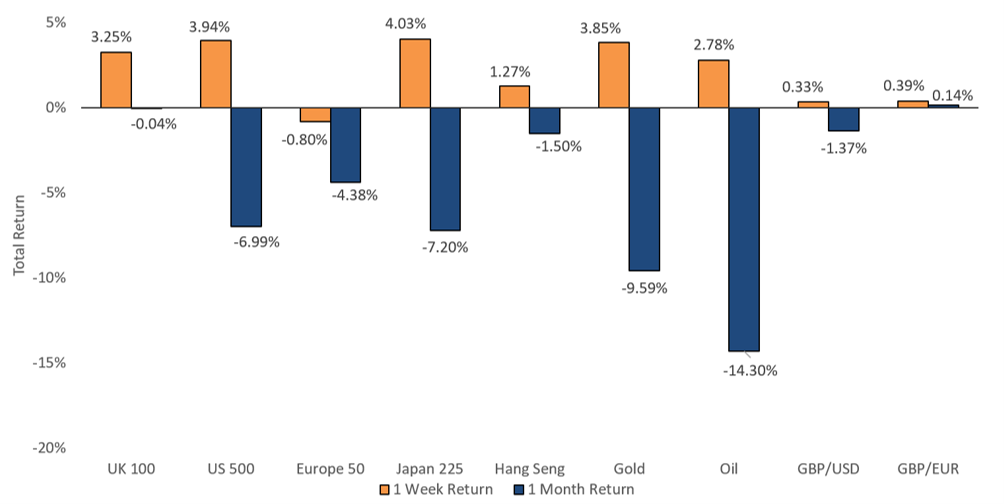
From the Tuesday before Thanksgiving to the second trading day in January, the S&P 500 has averaged a +2.58% gain since 1950. Smaller stocks, measured by the Russell 2000, fare even better, rising +3.34% over the same period[iv]. This year that seasonal pattern meets a weak market, with the S&P 500 down in eight of the last nine sessions[4].
Overall, we are seeing record dollar spending alongside cost-cutting consumers, more BNPL borrowing and a pricier turkey. A consumer who keeps spending despite higher prices may contribute to persistent inflationary pressures and complicate the outlook for interest rates.
Bowmore Portfolios
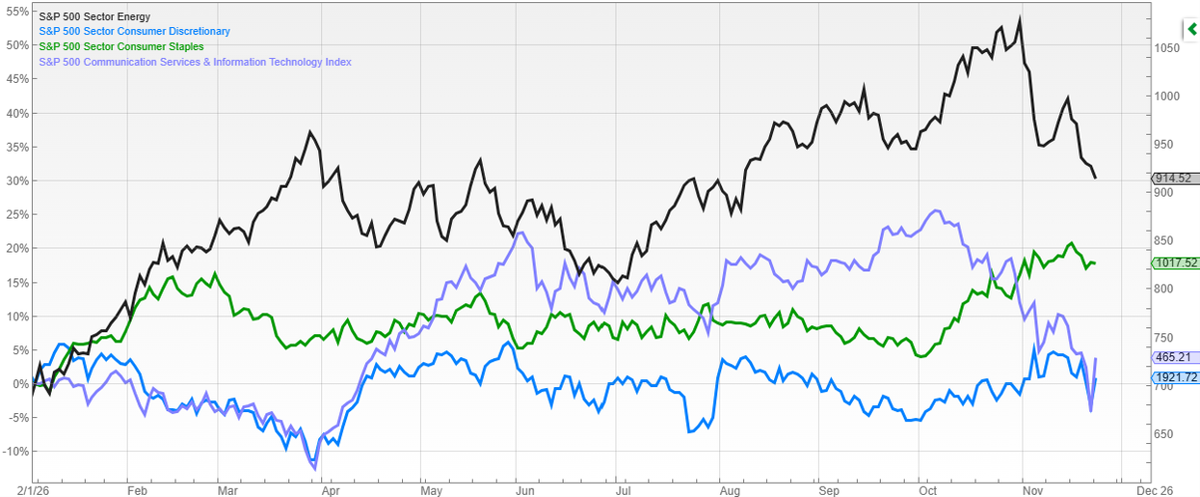
Year-to-date market moves reflect the stretched consumer, with S&P 500 energy companies leading, consumer staples recently showing strength and consumer discretionary – most vulnerable to cost pressures – posting anaemic growth. The purple line shows the well-documented volatility of the S&P 500 communication services and IT index.
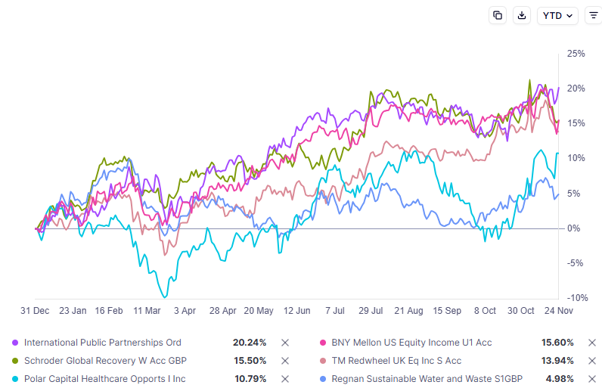
The inflationary pattern is something we recognised following the Iran/US conflict and have been taking steps to protect against. The chart below from AM Insights shows the year-to-date performance of six funds held in our Core portfolios during this period of rising inflation. Three of these are holdings we have added since the Iran/US conflict.
Encouragingly, they have broadly held up and delivered positive returns.
The value of your investments can go down as well as up, so you could get back less than you invested. Past performance is not a guide to future performance.
[1] Thanksgiving Travel Expected to Dip Slightly Compared to Last Year – AAA Newsroom
[2] Adobe: U.S. Holiday Shopping Season to Hit Record $275.1 Billion Online, Rising 6.7% YoY
[2] Adobe: U.S. Holiday Shopping Season to Hit Record $275.1 Billion Online, Rising 6.7% YoY
[3] Trump says he'd work with Democrats on a 10% credit card interest rate cap - Startup Fortune
[5] S&P 500: Thanksgiving Week Could Kick Off ‘Super Seasonal’ Path to Year-End Gains | Investing.com PH
[7] AlphaTerminal