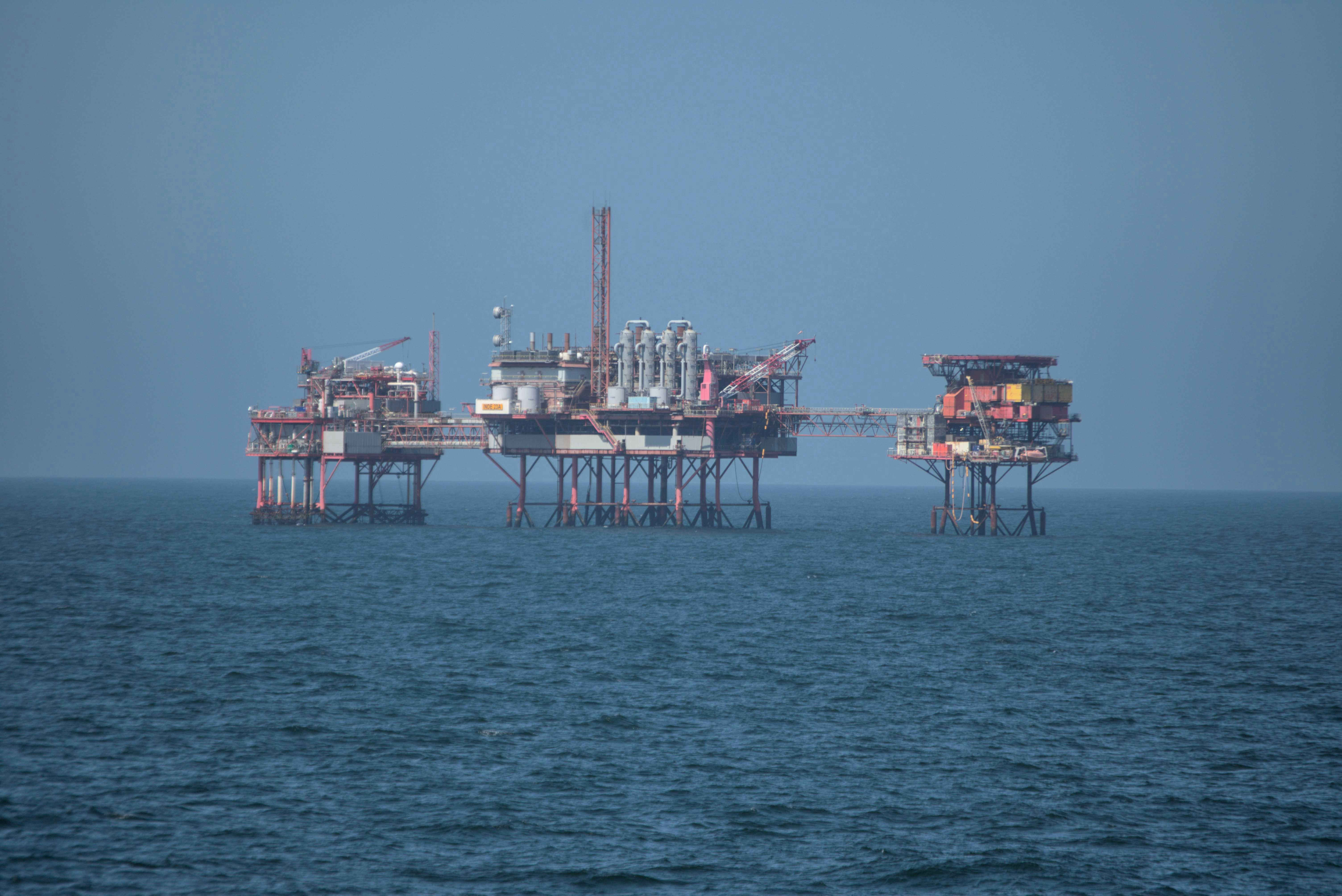
The UK government approved the Jackdaw gas field in the North Sea with first gas expected before the end of the month.1
Renewables supplied a record 52% of UK electricity in 2025 but the intermittency means that gas is still a necessary safety net.5
Approximately 140 proposed data centre projects are seeking grid connections in the UK. These would use more electricity than the country’s current peak demand.4
Data centre electricity consumption by region, 2020-2030
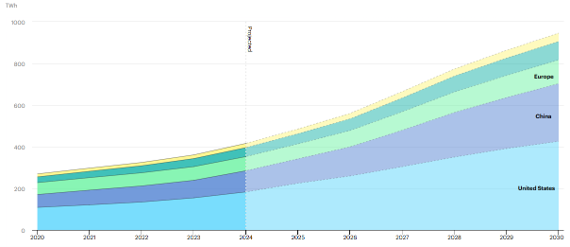
AI is changing how much power the world needs. The International Energy Agency (IEA) estimates that electricity demand from data centres rose 17% in 2025, more than five times faster than overall global demand growth of 3%, as technology companies spent over $400bn on AI infrastructure. It expects data centre demand to double by 2030 to around 945 terawatt-hours, more than Japan uses today, with AI-specific demand set to triple.2
The UK is no exception with forecasts showing data centre energy consumption rising to 26.2TWh by 2030 in the UK, more than five times today’s level.3 Energy regulator, Ofgem, reported that there are approximately 140 proposed data centre projects seeking grid connections in the UK - these would require more electricity than the country’s current peak demand.4
The energy menu

Gas is the UK’s largest single source of electricity, supplying 32% in 2025. It is available on demand but emits around 490g of CO₂ equivalent per kilowatt-hour over its lifecycle. Almost all UK fossil-fuel generation is gas; oil matters more for transport and industry than for the power grid.5
Nuclear supplied 12% of UK electricity in 2025, down 12% on the year and about half its 2015 output as the ageing fleet suffers outages and retirements. Replacement is slow and expensive: first power from Hinkley Point C is expected between 2029 and 2031 with a cost of £31bn to £35bn against an original budget of £18bn.6
Renewables supplied a record 52% of UK electricity in 2025, with wind and solar each producing ten times as much as in 2015.5 On emissions alone, renewables win. The difficulty is the intermittency; wind and solar produce power when the weather allows, not when demand requires it. Storage and grid upgrades will help, and they are needed: a tenth of wind power is currently wasted because there is nowhere to put it.7 The government’s Clean Power 2030 plan targets 23 to 27 GW of batteries but it still plans to keep gas as the safety net.8
The UK government has officially approved gas extraction in the North Sea
Prime Minister Andy Burnham has said Britain will need oil and gas for decades even as it pursues net zero by 2050.9 The question is whether that gas is produced at home or imported. UK gas production fell 3% in 2025 to its lowest level of this century.5 This year has shown the cost of relying on others with the closure of the Strait of Hormuz pushing UK gas prices up roughly 75% in March.10
The Jackdaw gas field is operated by Adura, a joint venture between Shell and Equinor, and lies 150 miles east of Aberdeen. It is expected to add around 6% to UK gas production at its peak. The government says the decision is compatible with its legally binding climate commitments and that it remains committed to ending new licences.1 They are not suddenly going ‘full blast’ as Trump advised.
We see Jackdaw as a bridge: it supports security of supply while the UK builds out renewables, storage and nuclear, rather than a reversal of policy.
Bowmore portfolios
The direct benefits for the UK economy are modest but real. Jackdaw and Rosebank, the oil field west of Shetland that is still awaiting a decision, will support more than 3,500 jobs at the peak of construction and around 880 throughout their working lives. Adura estimates the two fields could contribute more than £28bn to the economy.11
It is also estimated that North Sea gas saved the UK about £2.5bn in 2025 compared with importing LNG, with larger savings likely in 2026 given higher global LNG prices.12 The government is also trying to recycle the proceeds using tax revenues from North Sea oil and gas to invest in renewable and low-carbon projects.
We believe this improves the UK’s energy resilience and could help lower energy prices. It should be beneficial for the entire energy sector, renewables and oil and gas, benefitting both our ESG portfolios and Core portfolios respectively. We maintain a significant overweight to our home market, the UK, and whilst this news on its own is unlikely to have a material impact on the UK economy in the short-term, it is a step in the right direction.
The value of your investments can go down as well as up, so you could get back less than you invested. Past performance is not a guide to future performance.
Sources:
1Shell news – UK government approves Jackdaw gas field in North Sea
2 w.media – Data centre power demand will double by 2030:IEA
3Oxford Economics – Nuclear key to UK winning AI Race
4 The Guardian – new datacentres risk doubling UK electricity use.
5 Enerdata – The UK reached a 52.5% share of renewables
6 Rethink Research – Hinkley Point C nuclear power station delay
7 Drax – UK urgently needs more energy storage
8 Environment energy leader – UK opens enquiry into long-duration renewable gaps
9 oilprice.com – UK approves jackdaw gas field
10 Renewable Heating Hub – energy bills to rise again
11Kuwait Times – UK approves North Sea Jackdaw gas development
12Hellenic Shipping – Stifel says UK North Sea gas saves billions