Starlink is a division of SpaceX, which raised $75bn at IPO in June this year and currently trades at a 5% discount to its opening price1
Elon Musk owns a little under half (42%) of SpaceX’s shares, but controls c.82.4% of the votes2
Starlink already has satellites that act like cell towers in space, but has now set its sights on extending its offering directly to ordinary smartphones via a satellite network, challenging mobile operators
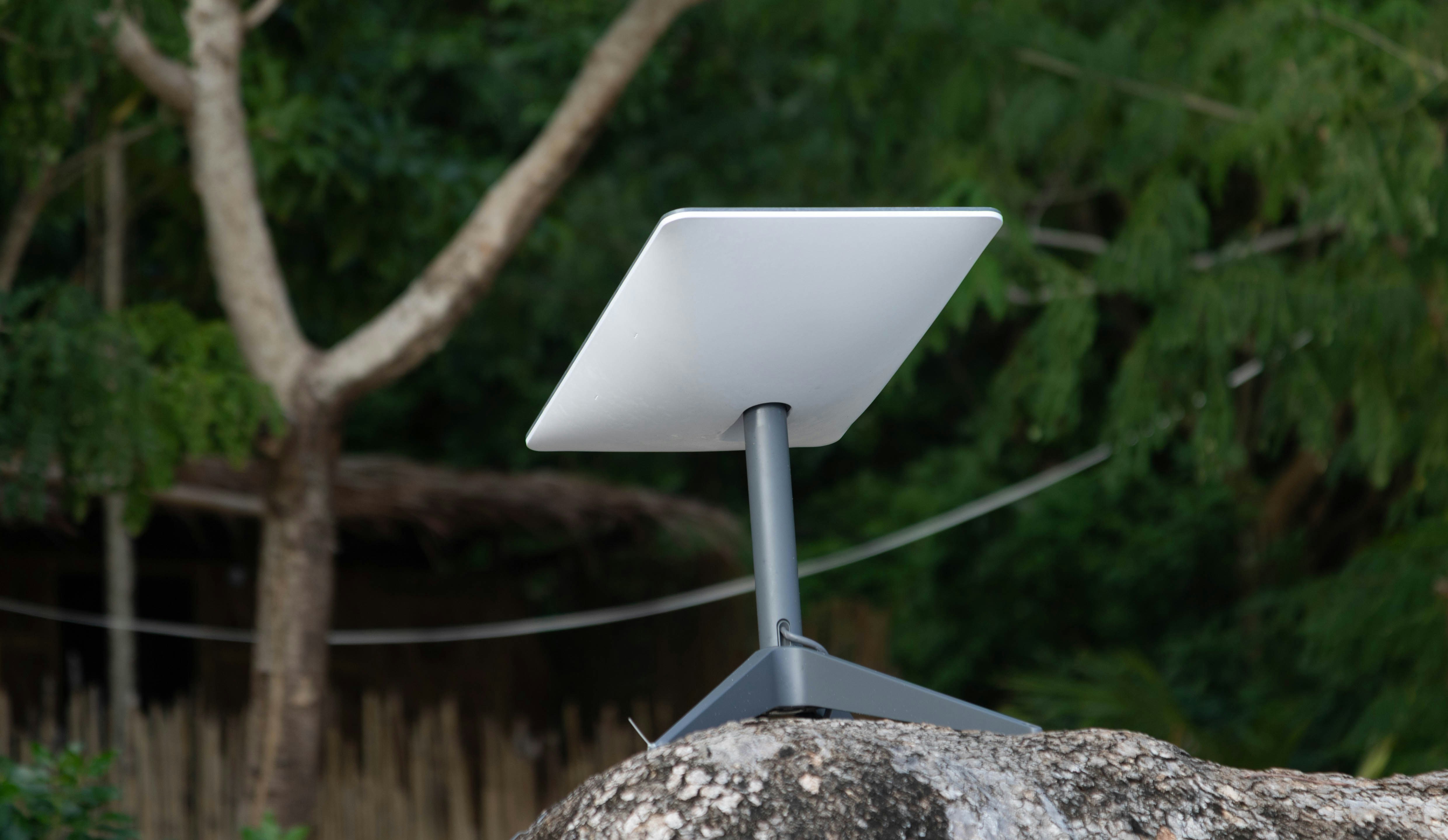
Starlink delivers internet access from a constellation of more than 10,000 satellites in low Earth orbit, around 550km above the Earth3. Traditional TV and internet satellites typically sit about 36,000km away4, so Starlink’s satellites are roughly 65 times closer. Signals have much less distance to travel, which means far less lag.
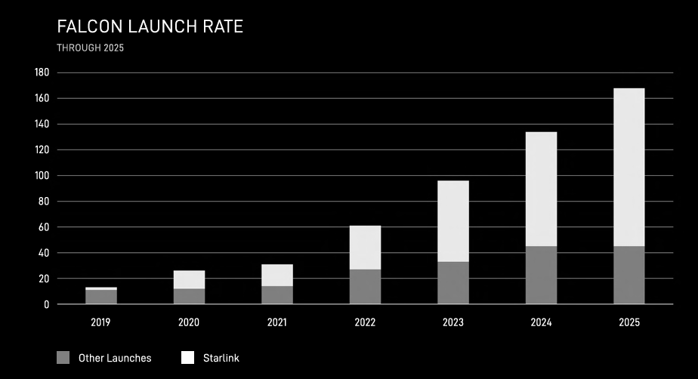
SpaceX launches the satellites on its own reusable Falcon 9 rockets. That keeps costs well below competitors’ and gives the company a significant advantage in scale. Customers receive a flat dish with no moving parts. It steers its beam electronically, tracking one satellite and handing over to the next as they pass overhead, many times an hour.
SpaceX also runs Starshield, a version of the same technology built for governments and defence agencies. It offers stronger encryption and secure links capable of handling classified data, and one of its largest customer is the US military5.
What’s caused the shake-up?
Starlink’s Direct to Cell satellites act as “cell towers in space”, connecting directly to ordinary smartphones in areas with no mobile coverage. While the signal travels across Starlink’s own network, the service currently operates through partner mobile operators such as T-Mobile in the US. The partners supply the licensed airwaves the phones use, and they keep the customer relationship, including the phone number, SIM and billing. In effect, it works much like roaming abroad: when your phone loses signal, it connects to Starlink’s satellites, but you remain a customer of your own provider6.
That is now set to change. SpaceX’s $17bn purchase of airwaves rights from EchoStar, combined with regulatory approval for its next-generation satellites, gives it the missing pieces needed to sell mobile services directly, potentially turning today’s partners into competitors7. Elon Musk claims this future network could eventually offer better connectivity and higher bandwidth when compared to existing providers8, which sent the share prices of its current mobile partners like T-Mobile, AT&T and Verizon sharply downwards last week1.
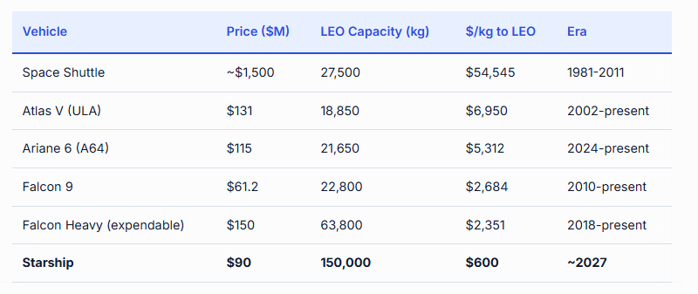
Looking further ahead, what is most exciting is how quickly the cost of reaching low Earth orbit has fallen. During the Space Shuttle era (1981–2011), launching a single kilogram cost c.$54,545. Today, SpaceX’s Falcon 9 does it for c.$2,684, a reduction of about 95%. Costs are expected to fall further still if Starship, designed to be the first fully reusable rocket, enters service as planned next year. Cheaper access to space makes it increasingly realistic to build more of our infrastructure in orbit.
Bowmore portfolios
In May, we added core infrastructure allocations to each of our actively managed mandates (Core, ESG and Income). The aim was to bring greater defensiveness to our alternatives allocation and to strengthen inflation protection.
Since then, the backdrop has been broadly supportive. Inflation has risen, likely affected by the ongoing conflict in Iran, and economic growth has remained steady. Rate expectations have shifted towards tightening, with some central banks already raising rates. That would normally be a headwind for the asset class, but the inflation-linked nature of infrastructure revenues has helped offset it.
Within Core portfolios, we introduced a position in International Public Partnerships (INPP). The investment trust aims to deliver predictable, inflation-linked cash flows and preserve capital by investing across energy transmission, transport, education, healthcare, justice and digital infrastructure. Notably, these are areas that space-based infrastructure, an increasingly important theme we explored above, does not yet reach. Since purchase, it has delivered a share price return of 4.6%, which is equal to that of the World Index over the same period.
The value of your investments can go down as well as up, so you could get back less than you invested. Past performance is not a guide to future performance.
Sources:
1Alpha Terminal, 2026
2 CNBC, 2026
3 High Speed Internet, 2026
4 Satellite Today, 2026
5 Elon Explained, 2026
6 Starlink 2026
7 Reuters, 2026
8 Tech Times, 2026
9 Orbital Radar, 2026