Important information: The value of investments and any income derived from them may go down as well as up. You may not get back the amount originally invested. Past performance is not a reliable indicator of future results.
Key Takeaways
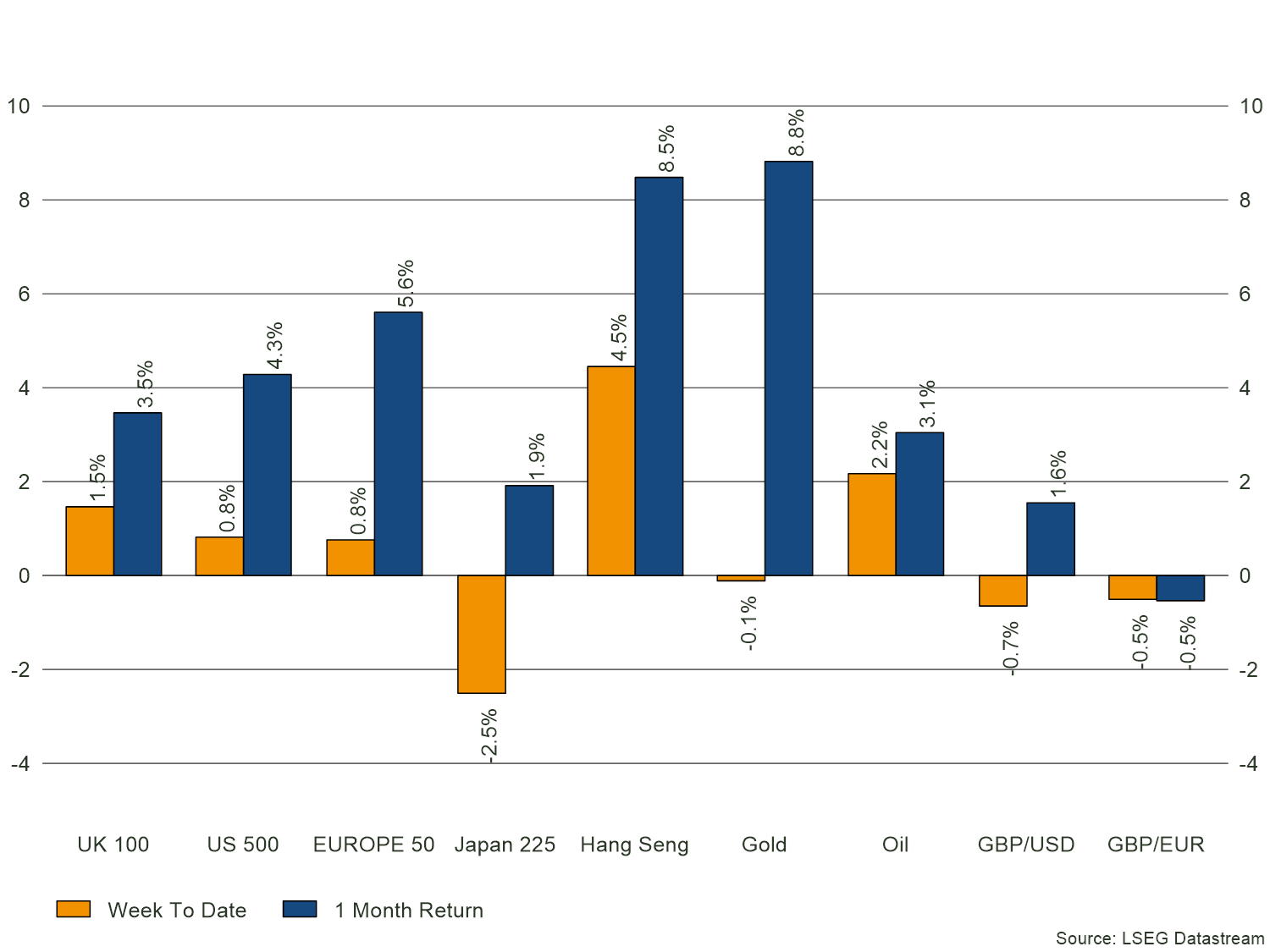
- US inflation was higher in February than in January
- Higher Inflation will force central banks to keep rates higher for longer
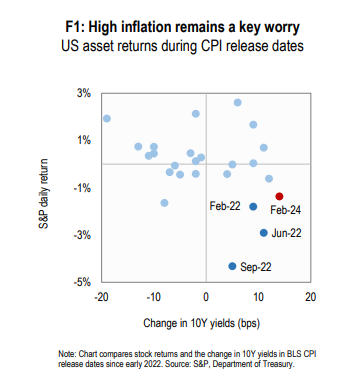
- Chart F1 shows that as bonds yields rise the S&P equity market falls
- It reduces what you can afford to buy
- It forces central banks to increase rates, which means debt costs rise and consumer spending falls. US GDP is 75% based around consumer spending.
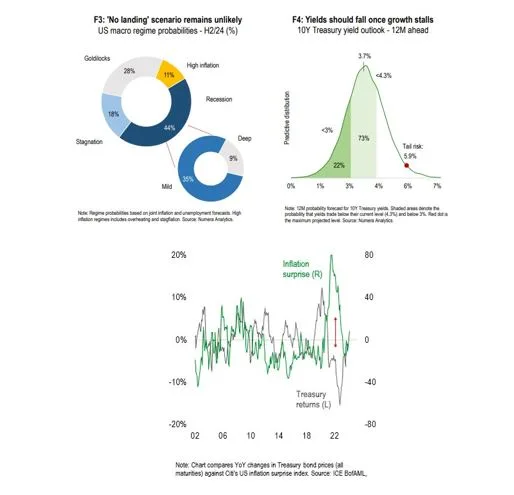
- It causes uncertainty, as the inflation surprise chart shows, people and markets like certainty. Sharp unexpected price changes force people to increase prices to protect themselves against unforeseen rises. Prices then rarely fall back!
- Inflation has an inverse relation with Fixed Income assets. High inflation destroys coupon values and therefore forces bond prices to fall. The opposite happens with falling inflation and so this is why we think bonds are attractive at the moment.