Important information: The value of investments and any income derived from them may go down as well as up. You may not get back the amount originally invested. Past performance is not a reliable indicator of future results.
Key Takeways
• Germany was the worst-performing major economy of 2023 and economic activity has flatlined since early 2022 according to the IMF.
• Though, like other European stock markets this year, the DAX appears notably strong - returning 1.3% so far and 20.31% in 2023.
• With a significant string of earning expectation downgrades in the region, we expect fortunes for the DAX to be reversed this year.
Despite enjoying strong historical economic performance, Germany is currently ranked 36th out of the 44 European countries in terms of GDP annual growth with a current rate of -0.2%. This lack of growth is largely attributable to elevated energy prices (70% higher than before 2020), waning export business and industrial production as well as ongoing nationwide disruption due to striking workforces and protests.
There seems to be a perfect storm of multiple crises though this has not (yet!) translated to a poor stock market return. Notwithstanding each of the above-mentioned factors, bullish investor sentiment and a reduced fear over energy shortages has pushed the DAX higher this year, returning 1.3% so far. A return that we believe has overvalued assets.
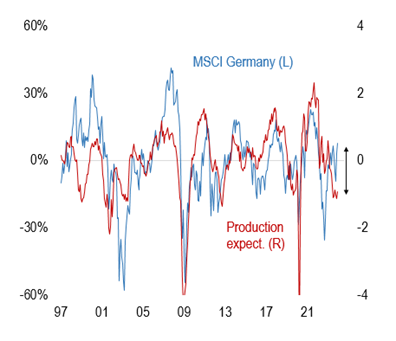
However, we consider this momentum unlikely to continue since the gap between production expectations and the German index has widened, as shown in the graph below. When similar gaps have formed previously, we have seen corrections of c.10% over the following year – a stark comparison to the average annual gains of 6.5%. Further, the ‘old economy’ make-up of the German stock market makes it particularly vulnerable to a manufacturing downturn since 31% of the index is comprised of industrials and car manufacturers that are heavily reliant on sales within the EU and US.
MSCI Germany vs, production expectations