The UK budget has been set for 28 October
Burham has been open about his spending ambitions, which might cost over £45bn (1.5% of GDP)[1]
The UK’s borrowing costs are the highest in the G7[2]
With the UK Budget scheduled for 28 October, speculation is already mounting over how Chancellor Healey will fund Prime Minister Burnham’s spending ambitions without pushing up borrowing costs further, materially increasing the tax burden (which is already on track to reach a post-war high), or placing further pressure on already weak economic growth. Striking the right balance will be critical to maintaining market confidence. With the UK’s borrowing costs now the highest in the G7[2], there is limited room for policy error.
UK Tax burden (% of GDP)
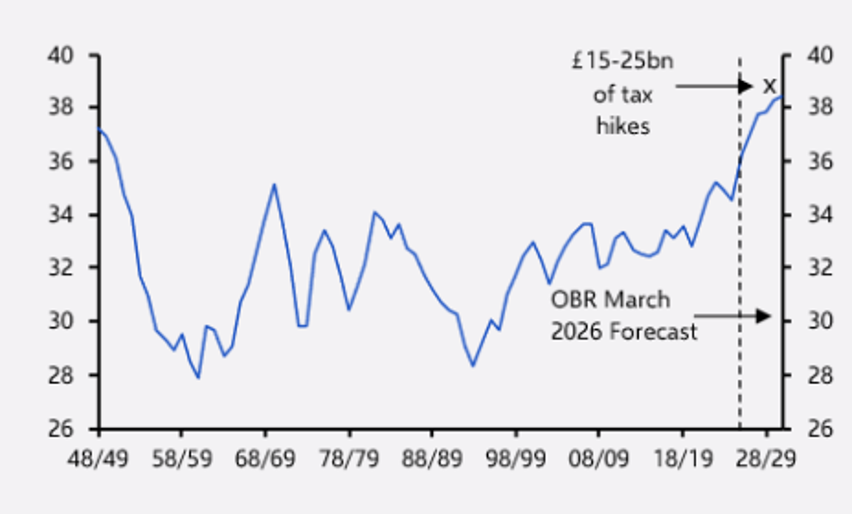
Source: Capital Economics, 2026
Although the details of the Budget will not be formally confirmed for some time, speculation has already begun over which taxes could be targeted. We believe Labour MPs are unlikely to support significant cuts to public spending. However, with public sector net debt remaining around 95% of GDP and GDP growth expected to slow in Q3, the Chancellor faces a challenging fiscal backdrop. The previously announced support for energy bills from 1 October will also cost approximately £850 million, adding further pressure to the public finances [1].
What could change?
While the Budget measures remain uncertain and no announcements have been made, political and market commentary has highlighted a number of areas that could attract attention as the Government seeks to balance spending commitments with fiscal discipline. This time, taxes on households, rather than businesses, may be focussed upon for change. Burnham’s pledge to honour the tax commitments in Labour’s manifesto limits his options though. Potential frontrunning changes include:
Income tax bands freeze: the heaviest lifting tax, representing c.28%3 of total public sector receipt, could be frozen again, and could raise c.£10bn a year[4]
Capital gains tax: the potential rise of rates, possibly to match income tax, or reducing the allowance (currently £3,000 per person) further[6]
Council tax reform: currently based on the value of your home at 1991 prices, this is rumoured to be changing to a flat charge based on the current value of your home[7]
Pension tax relief: potential reduction of the tax-free lump sum amount allowed (currently 25%) or review of employer national insurance relief on salary sacrifice[8]
Inheritance tax change: a possible cap on gifts out of income[5]
Bowmore portfolios
We’ve actively reduced our most sensitive domestically focussed exposure (UK small cap, namely the Gresham House UK smaller companies fund) during our most recent de-risking exercise. This reflects the challenging outlook for UK small cap businesses in the coming months, which, in our view, may face headwinds from higher taxation, weaker consumer confidence and inflationary cost pressures.
That being said, there are exciting opportunities elsewhere within the small cap space that we are taking advantage of within core portfolios, for example within the US. After a period of underperformance vs large cap, smaller companies are now outperforming. The fund we allocate to within the space is De Lisle’s American fund which focuses on investing in small and micro-cap US companies with strong growth potential, financial stability, and competitive advantages within their respective industries. The fund has returned 12.53% within the past 12 months.
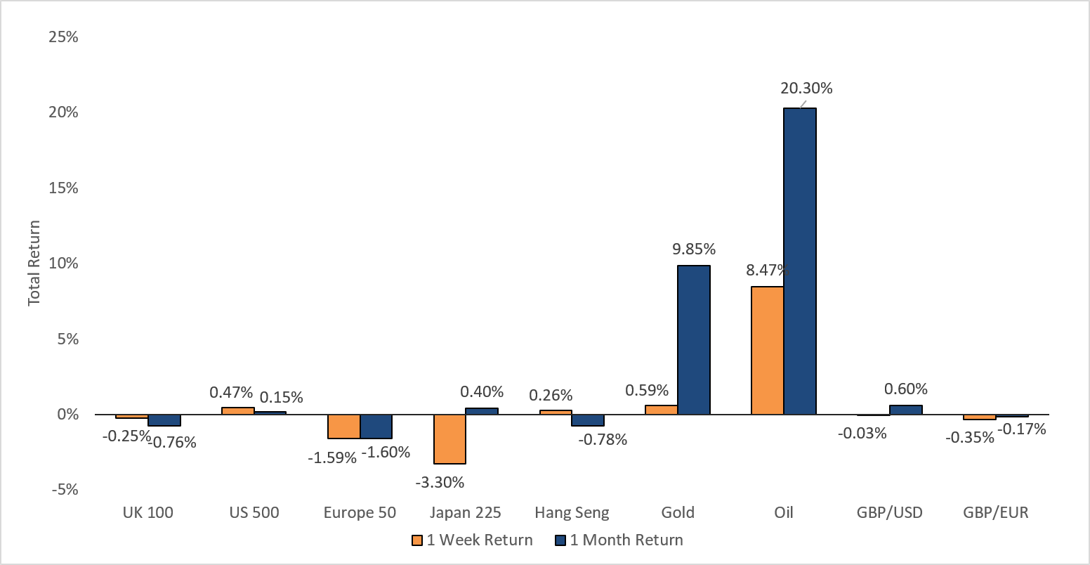
Source: AlphaTerminal, data as at 03/09/2026
The comments above reflect Bowmore's current investment views and are provided for information purposes only. They do not constitute a personal recommendation or investment advice, and future market conditions and investment outcomes may differ from those anticipate
The value of your investments can go down as well as up, so you could get back less than you invested. Past performance is not a guide to future performance.
Sources:
1Capital Economics, 2026
2 Portfolio Adviser, 2026
3 UK Parliament, 2026
4 Institute for Fiscal Studies, 2026
5 PKF Francis Clark, 2026
6 Charles Russell Speechlys, 2026
7 NRLA, 2026
8 BDO UK, 2026