Important information: The value of investments and any income derived from them may go down as well as up. You may not get back the amount originally invested. Past performance is not a reliable indicator of future results.
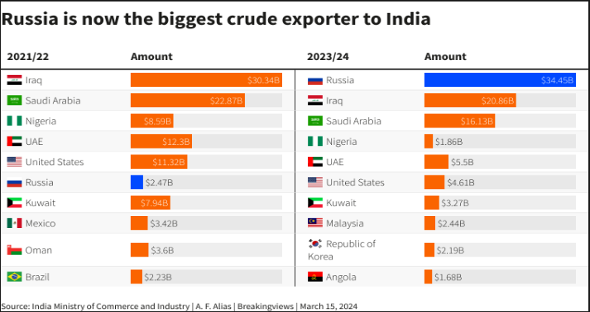
- Russian Growth of 2.6% outpaces that of G7 countries, with c.RUB9 trillion in energy revenues. A 25% decline from the peak last year, but above the 10 year average.
- Russia is spending RUB 14 trillion on the war effort and bereavement payments, which is a threefold increase since 2021.
- The so-called Grey Market is flourishing with little power of western governments to stop this.
- UK car exports to Azerbaijan have increased 1,860% over the five years ahead of the invasion according to HMRC trade data.
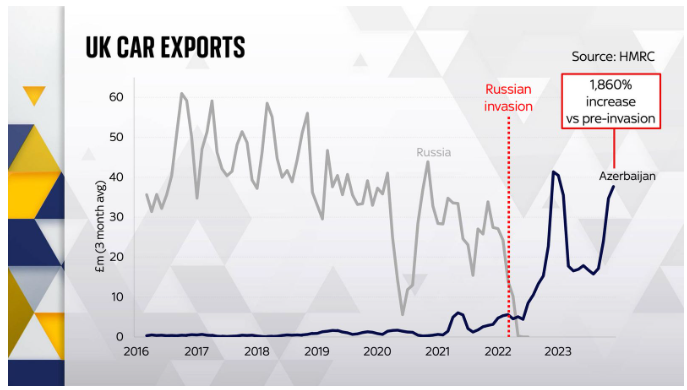 While the HMRC data does not identify specific carmakers or consignments, it does show that the port most used for this UK trade was the Port of Bristol, which had never previously exported more than a few million pounds worth of goods each year to Azerbaijan. In the two years following the invasion it saw those exports shoot up to more than £100m a year. The wider Grey market evidence in Russia sees a total of $6billion of parallel imports into Russia over 3 months from May to July 2023, giving access to high end cars, smart phones and other premium western brands to those in Russia who have the money to buy them even at the elevated prices they now command.
Conclusion
Russia was prepared for sanctions. They have tight capital controls, interest rates were increased significantly, along with exchange rate and capital controls that ensure foreign currency is deposited with the central bank to make up for those frozen as part of the sanctions. German exports to Russia have plunged, but exports to transit countries such as Kazakhstan, Armenia and Kyrgyzstan have mysteriously rocketed. “Britain, shamefully, is the biggest insurer of Russia’s international oil trade, to the tune of more than £100bn in the first 18 months of the war.”* The firms concerned are doing nothing illegal: our government allows them to rely on “attestations” that the cargoes comply with the G7’s price cap. Meanwhile, Russia is still importing millions of dollars’ worth of nitrocellulose, vital in making ammunition, from Nato countries and their partners. Ultimately, the west needs to decide what is more important. On one hand they need the revenue and on the other the defence of Ukraine. While there is little doubt that Russian sanctions have had some impact on specific areas of the Russian economy and political landscape, their overall effectiveness in achieving their desired goals remains subject to debate. Sanctions alone may not be sufficient to induce the desired changes in Russian behaviour, and a comprehensive strategy that combines diplomatic, economic, and other measures may be necessary to address complex geopolitical challenges.
*Edward Lucas, The Times.
While the HMRC data does not identify specific carmakers or consignments, it does show that the port most used for this UK trade was the Port of Bristol, which had never previously exported more than a few million pounds worth of goods each year to Azerbaijan. In the two years following the invasion it saw those exports shoot up to more than £100m a year. The wider Grey market evidence in Russia sees a total of $6billion of parallel imports into Russia over 3 months from May to July 2023, giving access to high end cars, smart phones and other premium western brands to those in Russia who have the money to buy them even at the elevated prices they now command.
Conclusion
Russia was prepared for sanctions. They have tight capital controls, interest rates were increased significantly, along with exchange rate and capital controls that ensure foreign currency is deposited with the central bank to make up for those frozen as part of the sanctions. German exports to Russia have plunged, but exports to transit countries such as Kazakhstan, Armenia and Kyrgyzstan have mysteriously rocketed. “Britain, shamefully, is the biggest insurer of Russia’s international oil trade, to the tune of more than £100bn in the first 18 months of the war.”* The firms concerned are doing nothing illegal: our government allows them to rely on “attestations” that the cargoes comply with the G7’s price cap. Meanwhile, Russia is still importing millions of dollars’ worth of nitrocellulose, vital in making ammunition, from Nato countries and their partners. Ultimately, the west needs to decide what is more important. On one hand they need the revenue and on the other the defence of Ukraine. While there is little doubt that Russian sanctions have had some impact on specific areas of the Russian economy and political landscape, their overall effectiveness in achieving their desired goals remains subject to debate. Sanctions alone may not be sufficient to induce the desired changes in Russian behaviour, and a comprehensive strategy that combines diplomatic, economic, and other measures may be necessary to address complex geopolitical challenges.
*Edward Lucas, The Times.