
The European stock market has lagged the other major geographies, delivering just 11.81% versus the global market return of 13.03%.[1]
Rising oil prices have hurt a European economy that relies heavily on imported energy and is an industrial powerhouse with 14% of GDP coming from manufacturing.[2]
Germany has committed to a €500 billion infrastructure spending package to rewire supply chains and energy networks.[3]
Europe lagging
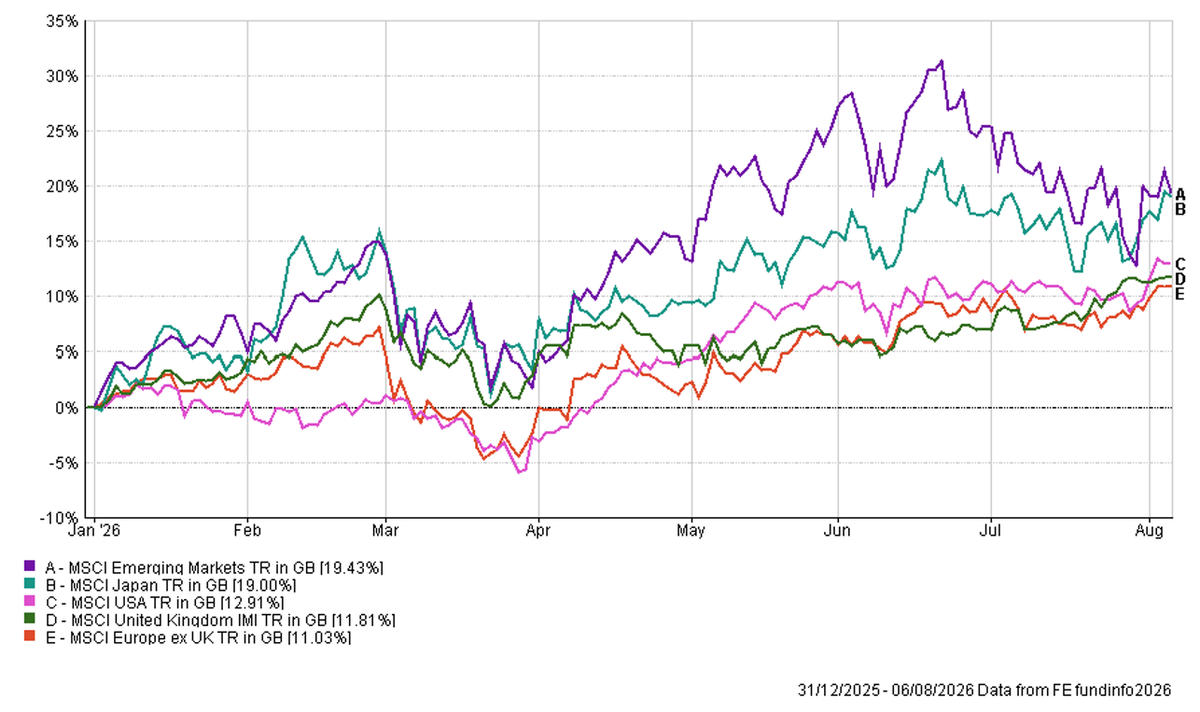
So far in 2026, the European stock market has lagged the other major geographies, delivering just 11.81% versus the global market return of 13.03%.[1] There are quite a few good reasons for this:
Energy Vulnerability – The disruption to shipping routes in the Strait of Hormuz contributed to oil prices soaring to over $110 per barrel in March, just as resurgent tensions contributed to increased oil price volatility in May and again in July. Europe relies heavily on imported energy and so higher energy prices have impacted input costs for Europe. This is particularly painful for a region that is an industrial powerhouse with manufacturing making up 14% of its GDP.[2]
Lack of AI exposure – Previous notes of ours have explored how AI is the leading component in the growth of both stock markets and the economy at the moment. Europe does have one of the largest names in the semiconductor supply chain (ASML) but its concentration to tech (IT) is minimal in comparison to other regions:
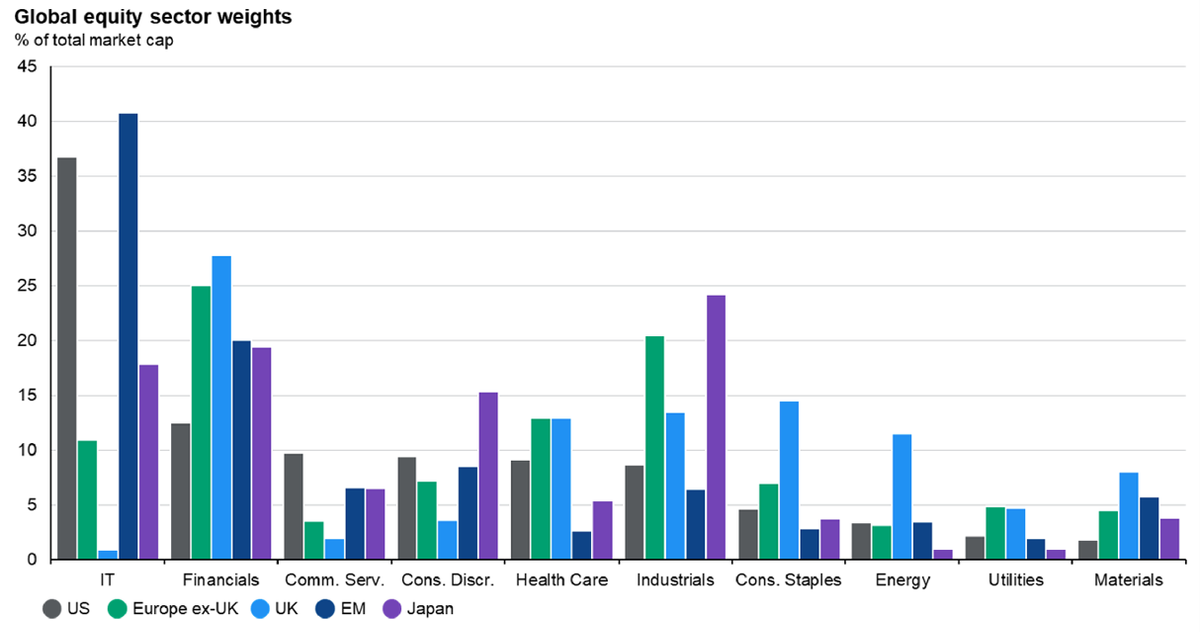
Source: JPMorgan Guide to the Markets
The Central Bank – Lastly, the energy shock reignited inflation in the region, creeping back up to 2.9%. The ECB is one of the only central banks to have already increased interest rates in 2026 and is widely expected to go further. GDP growth is already sluggish in Europe and rising interest rates will do this no favours.
So why invest in Europe?
The backdrop has clearly not been favourable for European Equities, but problems also present opportunities for solutions and thus investments. The energy vulnerability appears to have triggered a complete rebuilding in supply chains and energy networks; German Chancellor Merz has bypassed spending constraints to commit to a €500 billion infrastructure spending package.[3] One part of this is The EU’s Critical Raw Materials Act which is trying to diversify away from Europe’s dependence upon China for critical raw materials that are a core component in the clean energy transition, throwing up numerous investment opportunities.
In our view, the US-Iran war has also highlighted the problem with relying on a single chokepoint for global energy supply. Supply routes are likely to shift, even if they are longer and more complex – this increases demand for vessels but also more efficient ones as emission standards tighten. Separately, the boom in weight-loss drugs has also identified a constraint in peptide manufacturing where barriers to entry are high and new facilities take years. Europe’s beneficiaries in this supply chain go way further than just the drug developers and its manufacturing expertise may just come in handy.
Bowmore portfolios
We have had very little exposure to Europe this year, favouring Japan and Emerging Markets – much to portfolios’ benefit. The odds are also stacked against Europe but with that comes a discounted valuation. Swimming against the tide is always uncomfortable, but we can see catalysts for Europe to rerate – its Industrials and Healthcare sectors transforming from headwinds to tailwinds. Any future portfolio changes will depend on prevailing market conditions and individual portfolio objectives however this is an area we can see ourselves adding to in the coming months.
[1] FE Analytics
[2] European Union - Manufacturing, Trading Economics
[3] BBC News - Germany's Merz promises to do 'whatever it takes' on defence
The value of your investments can go down as well as up, so you could get back less than you invested. Past performance is not a guide to future performance.